- WHAT'S BUGGING YOU? Contact Our Experts Today!
- CALL OR TEXT US AT: 727-734-0963
- mpcmanage@gmail.com
Personalized Pest Solutions!!

Locally Owned and Trusted Since 1999

Lawn Pest Control Florida: Year-Round Protection & Tips
September 30, 2025
How to Spot the Signs of Termite Damage in Pinellas County
March 26, 2026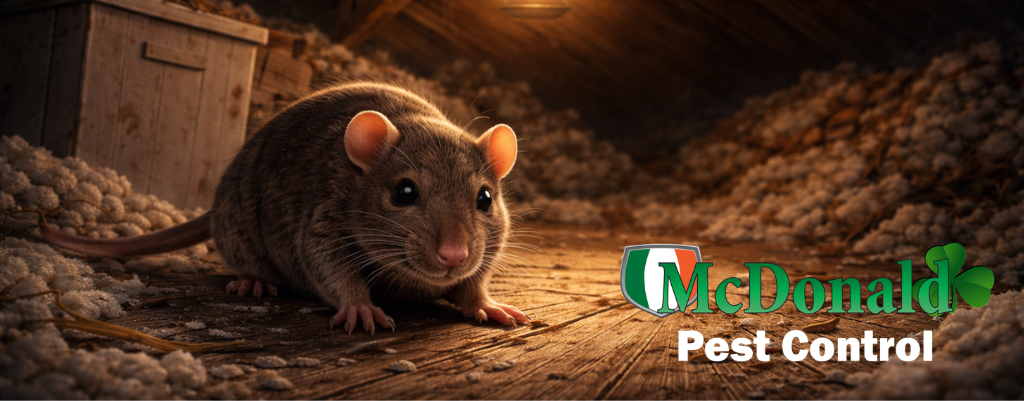
Why are there scratching noises in my attic at night in Pinellas County?
Nighttime attic noises in Clearwater and St. Petersburg are typically caused by Roof Rats, Raccoons, or Southern Flying Squirrels. High humidity and suburban proximity to mangroves increase rodent populations. This guide identifies species-specific sounds and provides a technical strategy for identifying entry points using thermal gradients.
Identifying the Source of Scratching Noises in the Attic at Night
If you are hearing scratching in the attic after the sun goes down in Pinellas County, you likely have a Roof Rat or Raccoon infestation. These nocturnal pests use the attic for shelter while scavenging for food and water in nearby residential yards.
Because Pinellas is a peninsula with high humidity and dense vegetation, rodent populations thrive here year-round.
Why Pinellas County Homes are Hotspots for Attic Noises
Living in Pinellas County offers beautiful coastal views, but the local environment is a breeding ground for specific pests. The combination of older oak canopies in neighborhoods like Old Northeast and the modern construction in North County creates a perfect storm for wildlife encounters.
The Roof Rat: Florida’s Most Common Culprit
Most residents hearing scratching are actually dealing with Rattus rattus, commonly known as the Roof Rat. Unlike the larger Norway Rat, Roof Rats are agile climbers. They prefer high elevations.
If you hear fast, light scratching sounds or animals running across the ceiling, it is almost certainly a colony of these rodents. They enter through gaps as small as a quarter, often where roof lines meet or through unshielded soffit vents.
Raccoons: The Heavy Hitters
If the noise sounds more like a person walking or involves thumping noises, you are likely hosting a raccoon. Female raccoons frequently seek out Pinellas attics to give birth. These animals are powerful enough to rip through shingles or force their way into a gable vent
Southern Flying Squirrels
Many homeowners are surprised to learn that Pinellas County has a massive population of Southern Flying Squirrels. These are strictly nocturnal. If you hear high-pitched chirps combined with frantic scratching in the attic, these small gliders are the probable cause.
The Connection Between Your Yard and Attic Noises
Pests do not choose your home at random. They are attracted to specific environmental cues.
- Food Sources: Citrus trees, bird feeders, and unsecured trash cans are primary draws.
- Water: Clogged gutters or dripping AC condensation lines provide the hydration necessary for a rodent infestation to flourish.
- Entry Point Accessibility: Tree limbs overhanging the roof act as a highway. If a branch is within six feet of your roofline, a Roof Rat can easily jump onto your home.
The “Thermal Bypass” Pro-Tip
Most DIY inspections fail because they only look for visible holes. Professional pest control technicians look for Thermal Bypasses.
In the humid Florida climate, cool air escapes the home through tiny gaps in the attic floor or wall plates. Rodents use their whiskers and highly sensitive noses to “scent” these air leaks. They can literally feel the temperature difference. They will gnaw through wood or drywall, specifically at these thermal leak points, because they know it leads to a conditioned space or a protected nesting site.
If you want to find an entry point that isn’t obvious, use a thermal camera or a smoke pen around your attic’s “kneewalls” and plumbing stacks to see where air is moving. That is where the rats are getting in.
Differentiating Between Rats and Mice
While the house mouse is common in many parts of the country, Pinellas County attics are dominated by rats. A house mouse typically stays closer to the ground, often nesting in kitchen pantries or behind baseboards.
If the scratching sounds are coming from the highest point of the house, you are dealing with a rodent that has high-climbing instincts. Rats and mice both leave behind droppings, but rat droppings are significantly larger (about the size of a raisin) and pose a greater health risk to your family.
Why You Must Act Quickly
Hearing scratching is the first warning sign of a much larger problem. Once a rodent population establishes itself, the damage becomes exponential.
- Electrical Hazards: Rodents must gnaw on hard surfaces to file down their teeth. They frequently target electrical wiring, which is a leading cause of house fires in Florida.
- Insulation Contamination: Urine and feces destroy the R-value of your insulation and create a foul odor that permeates the living space.
- Pathogens: Rats carry leptospirosis and salmonella, which can spread through air ducts.
FAQs
What animal makes a loud thumping noise in the attic at night?
Loud thumping or heavy walking usually indicates a raccoon or an opossum. These larger mammals are much heavier than rats and create distinct, rhythmic sounds as they move across the ceiling joists or attic floor.
Can I get rid of attic noises myself?
While trapping is possible, it does not solve the root cause. Without professional exclusion work to seal every entry point, new animals will simply follow the pheromone trails left behind by the previous inhabitants and move back in.
Why do I only hear scratching noises at night?
Most Florida attic pests, including Roof Rats, raccoons, and flying squirrels, are nocturnal. They spend the daylight hours sleeping in the safety of your insulation and become active as they leave the house to find food and water.
Are the scratching sounds coming from the walls or the attic?
Rodents often use the wall voids as “elevators” to move between the attic and the kitchen. If you hear scratching in the walls, it is likely a rodent traveling toward a food source or seeking a cooler area of the home.
How do I stop rats from entering my Pinellas County home?
Trim all tree branches at least 6 to 10 feet away from your roofline. Ensure all vent covers are made of heavy-duty galvanized steel mesh, as rodents can easily chew through plastic or standard window screening.
Professional Pest Control in Pinellas County
Identifying the specific animal behind those scratching sounds is the first step toward reclaiming your home. At McDonald Pest Control, we understand the unique challenges of Florida wildlife.
We don’t just set traps; we perform a detailed inspection to identify every entry point and thermal bypass that allows pests to invade your space.
If you are tired of losing sleep to attic noises, let our experts provide a permanent solution.
Ready to clear your attic?